This year’s Ācārya Mahāprajña Annual Lecture will be held on Thursday 5 October, from 4:30 pm. It will take place in the Faculty Board Room (Blandijnberg 2), but will also be accessible online (see below for registration).
Our speaker Prof. Dr. Claire Maes (University of Tübingen) will discuss the age-old Jain practice of sallekhanā (a form of end-of-life fasting) in light of contemporary medical and legal frameworks.
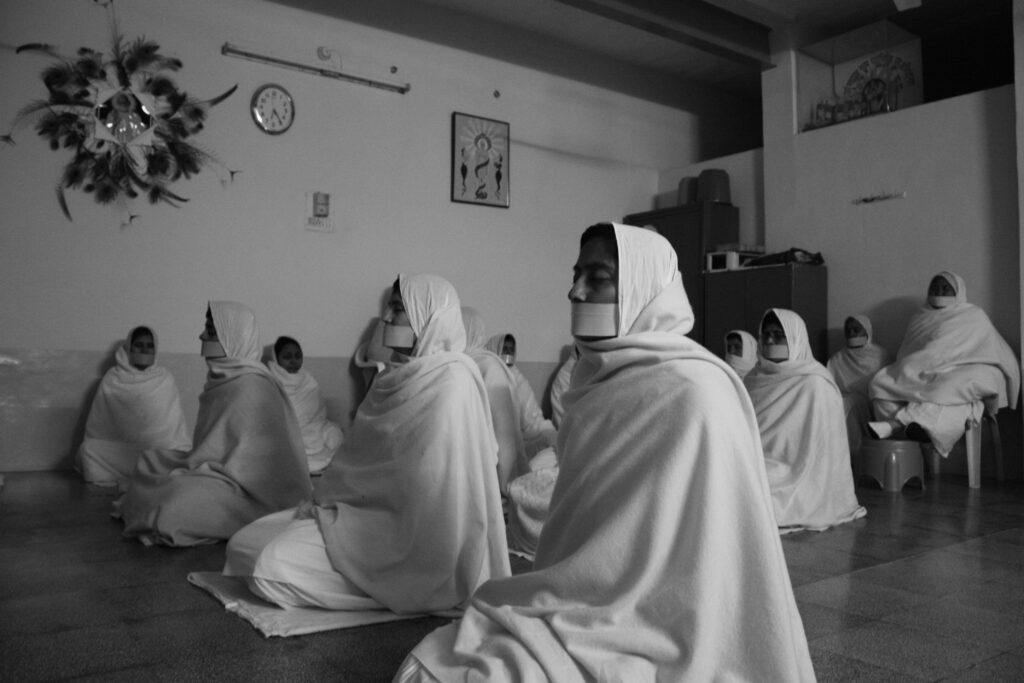 Beyond Life’s End: Towards an Ethical Evaluation of the Jain Practice of Fasting to Death
In this lecture, I make an ethical argument to consider the Jain practice of fasting to death (known as sallekhanā) as different from suicide. To this end, I bring the Jain fast into conversation with the practice of ‘Voluntarily Stopping of Eating and Drinking’ (VSED), an end-of-life option, available in various countries for competent adults, to hasten the end of life by consciously choosing to not eat and drink. From a medical and legal point of view sallekhanā can be considered a form of VSED. Although differing in terms of intent and historical context, the two practices are similar insofar that they relate to capable and sound individuals who voluntarily forego food and water until death. Showing the critical similarity between VSED and sallekhanā, I argue that the grounds put forward by major medical associations and legal societies to differentiate VSED from suicide are equally applicable to the case of sallekhanā. I contend that the Jain fast needs to be disentangled from the concept of suicide based on the quality of intent, but also because the process is, in theory and for some time at least, reversible, supported by loved ones and members of the larger Jain community, and dependent on the individual’s continuous and prolonged will of renouncing food and water. I also show how medical and legal authorities defend an individual’s right to VSED based on the principles of self-determination, bodily integrity, self-ownership, and respect for persons. I put forward the view to take these ethical principles into account to legally protect a Jain’s right to take the vow of sallekhanā.
Speaker
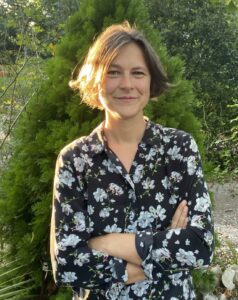 Claire Maes studied Indian Languages and Cultures at Ghent University, Belgium, and Indian Philosophy at the University of Mysore in India. She earned her Ph.D. degree in 2015 from Ghent University with a dissertation that examines the influence of Jain thought and practice on the Buddhist monastic community in early India. Soon after, she joined the University of Texas at Austin where she worked for several years at the Asian Studies Department, first as a postdoctoral fellow of The Robert H. N. Ho Family Foundation Program in Buddhist Studies, and subsequently as a Sanskrit lecturer. Since September 2021, she is an assistant professor at the Department of Indology at the University of Tübingen, Germany. Her principal research topics are the Jain understandings of what constitutes a good death and the development of the Buddhist monastic community in ancient India.
Registration
Register for on-campus attendance: https://event.ugent.be/registration/annuallecture
Register for online attendance: https://event.ugent.be/registration/annuallectureonline
This event will be followed by a small reception.